The Timeless Human Desire to Create Tools
#54 Memory Matters
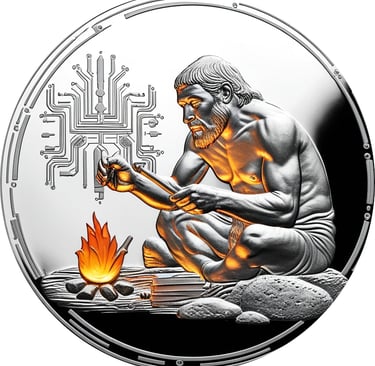
For over twenty-five years I've built a life inside a technical company where memory architecture, debugging marathons, and whiteboard problem-solving sessions have shaped my days—and many of nights. But the part of the job that has always kept me rooted isn’t just the technology; it’s the people who work shoulder-to-shoulder with me. Last Tuesday, during our Friendsgiving taco lunch, I was reminded of that truth all over again. Our manager brought back engineers who had once been part of our team but had since moved on to new chapters. It felt like a family reunion of sorts, full of familiar voices, half-finished stories, and the easy laughter of people who once spent ten or more hours a day solving hard problems together.
As we swapped memories of stress-filled debug sessions and celebrated old design victories, the conversation naturally drifted to the topic that seems to find its way into every gathering now: AI. The majority of the group use AI tools every day, weaving them into their workflows as effortlessly as we once adopted new test benches or hardware analyzers. Others admitted they had barely touched AI, and a few had never used it at all. What struck me wasn’t the divide—it was the curiosity, the openness, and the way everyone leaned in, eager to understand how these tools might shape the work they love. It reminded me that the desire to learn never fades in this line of work; it just adapts to new tools.
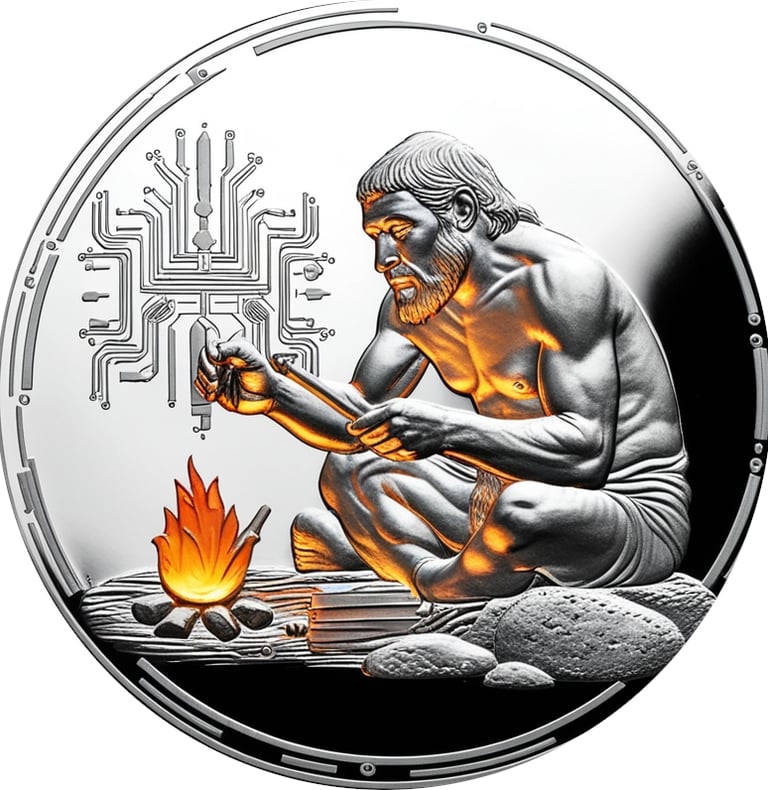
That instinct—to build and to improve our tools—runs deep in human history. From the first stone hand axe to the bow and arrow, from fire to writing, and eventually from the abacus to the modern computer, we’ve always created things to make the hard parts of life a little more manageable. Tools have helped us survive, build, communicate, and dream bigger than the generation before us. AI is simply the newest entry in that long lineage. It isn’t the first technology to inspire excitement and fear at the same time, and it won’t be the last. Like every tool before it, AI will change certain jobs while creating entirely new ones we haven’t imagined yet.
As we step into this next era, I believe the most important skill we can bring is not blind trust in technology, nor discomfort with it—it’s analytical thinking, curiosity, and the humility to double-check our ideas. In the future, our decisions will sit next to an AI-generated suggestion, inviting us to compare, refine, and reason more clearly. If we use AI the way humans have always used tools—to extend our abilities rather than replace them—we will all get better. And just like those long afternoons spent around a whiteboard with trusted teammates, the collaboration between humans and AI will be most powerful when grounded in relationships, shared knowledge, and the simple desire to collectively solve problems.
Why AI Matters today (For Everyone)
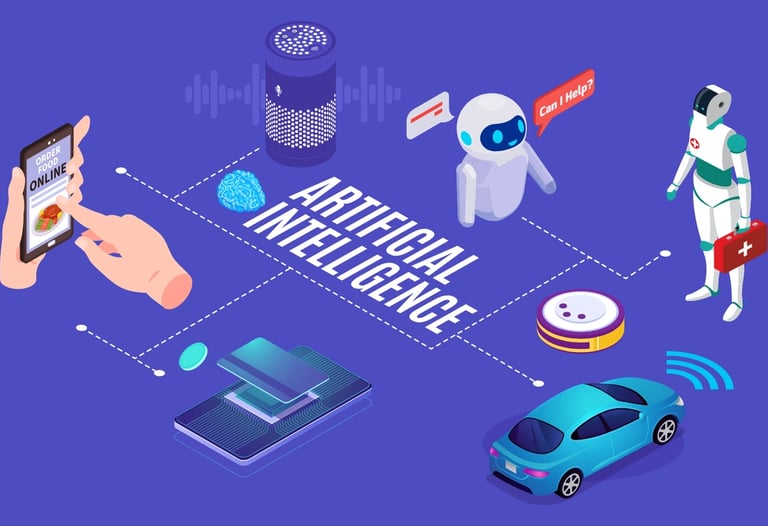
Image Source: Revolveai
"The best way to predict the future is to invent it." — Alan Kay, Computer Scientist and Turing Award Winner
Science fiction has become reality. Artificial intelligence now shapes our daily experiences in ways both obvious and subtle. Our interactions with technology are more natural than ever before.
From science fiction to kitchen assistant
AI's path from fantasy to reality is remarkable. Stories about artificial intelligence go back to Greek antiquity. The technological revolution started turning fiction into possibility in the mid-20th century [1]. Alan Turing, the British mathematician and WWII code-breaker, created some of the earliest concepts of thinking machines in 1950. His Turing test remains a measure for machine intelligence today.
The 1980s personal computer revolution sparked new interest in intelligent machines. Ideas from science fiction films like "2001: A Space Odyssey" with its AI character HAL 9000 started becoming real applications [1].
Today, AI has surpassed theoretical concepts. It's a versatile tool that enhances decision-making in healthcare, transportation, finance, and many more sectors [2]. The economic effect is significant—PriceWaterhouseCoopers estimates artificial intelligence could increase global GDP by USD 15.70 trillion (a full 14%) by 2030 [2].
How AI became part of daily routines
AI technologies help us quietly from morning until night [3]. In spite of that, people's awareness varies—77% use AI-powered services or devices, but only 33% believe they use AI [4].
This change happened gradually. AI entered our homes through helpful applications. Virtual assistants now organize calendars, smart thermostats learn our temperature priorities, and recommendation systems create entertainment options that match our interests [5].
These tools are now available to everyone with a smartphone. AI is no longer just for tech specialists or science fiction fans.
Examples of AI in everyday life
AI's presence in daily activities might surprise you:
Morning routine: Face ID unlocks your smartphone using 30,000 invisible infrared dots to authenticate your identity with only a one-in-a-million chance of error [3].
Communication tools: Email applications use AI to filter spam, categorize messages, and prioritize your inbox [5].
Health management: Wearable devices with AI algorithms track vital signs, monitor activity levels, and can predict potential health concerns [5].
Kitchen companions: AI-powered cooking assistants help with meal preparation, organize recipes, manage pantry inventory, and provide nutritional information [6].
Transportation: Navigation apps analyze traffic patterns in real-time and offer optimal routes with accurate arrival estimates [3].
Who is Using AI and for What?
AI tools have exploded in popularity across every imaginable demographic. People from teenagers to retirees now use AI in their daily routines, regardless of social and economic boundaries. These tools continue to change how we work, learn, and live.
Adoption across age groups and income levels
The demographic trends in AI usage reveal interesting patterns. Research shows that 94% of employees and 99% of C-suite leaders know about generative AI tools [7]. Business leaders don't realize how much their employees use AI. They think only 4% of employees use AI for at least 30% of their daily work, while the actual number is three times higher [7].
Age shapes AI adoption patterns substantially. People aged 35-44 (Millennials) lead the pack, with 62% claiming high AI expertise. This compares to 50% of Gen Z (18-24) and only 22% of baby boomers over 65 [7]. These numbers challenge the common belief that younger generations are always more tech-savvy.
A person's income affects their AI adoption rate. Pew Research discovered that a country's income (measured by GDP per capita) directly relates to AI awareness. People living in wealthy nations generally know more about AI than those in less prosperous economies [8]. This relationship raises concerns about fair access to these powerful tools.
Parents and students as power users
Students have quickly embraced AI technology. Half of young people between 14-22 use generative AI. They mainly use it to get information (53%) and brainstorm ideas (51%) [9]. Parents keep up with this trend - about 50% of adults with children have tried AI tools [10].
Students use AI creatively too. They make pictures or images (31%), create sounds or music (16%), and write code (15%) [9]. Their academic use focuses on writing reports (20%), editing documents (19%), summarizing notes (19%), and creating presentations (16%) [10].
Parents remain divided on AI use. A quarter of adults think teens shouldn't use AI for school work, except tutoring [10]. The numbers show that 43% oppose teenagers using AI to write papers [10]. Still, 62% of teens believe AI will make learning easier [10].
Work, School and Home as Key Drivers
The workplace has become AI's main adoption ground. Today, 40% of employees use AI at work - double the number from two years ago [11]. Workers utilize AI to draft emails (17%), summarize notes (14%), get prospective insight and edit documents (20%) [10].
Schools actively incorporate AI into their programs. They develop detailed AI initiatives, ranging from undergraduate computer science concentrations to academy programs. These programs prepare thousands of students for AI-enhanced workplaces [12].
AI assistants now manage homes' thermostats and security systems. Consumer AI applications serve dual purposes - 30% of usage relates to work while 70% serves personal needs [13]. This split shows how AI connects our professional and personal lives.
Humans in the Lead: AI as a helper, not a replacement
As Artificial Intelligence technology continues to grow, a basic truth stands clear: humans remain in control. People and AI share a partnership of mutual growth rather than replacement. They work together in harmony, each making the other stronger. Well have to expand a blog topic on this in 2026 because this could easily change based on near term decisions made.
Users naturally drift toward familiar general AI assistants for almost every task, even though specialized applications abound [14]. The "Default Tool Dynamic" shows how people test their favorite general AI tool first—regardless of task—and search for other options only when needed [14]. Research shows 60% of users work with both general AI assistants and specialized AI tools, which suggests more sophisticated work patterns. This choice comes from convenience rather than limited options.
The role of prompting and human input
Crafting effective prompts has become vital to tap into AI's full potential [15]. This new skill changes our interactions with AI systems and connects human intentions with machine comprehension [16]. The human-in-the-loop (HITL) approach keeps people actively engaged in AI workflows. They provide the oversight and input that machines can't copy [17]. Even the smartest AI produces basic results without proper human guidance through prompting.
AI supports, but doesn't decide
AI works as a tool to boost human judgment rather than replace it [18]. Many believe human decisions offer unique value, despite rapid tech advances [19]. The best results come when experts carefully review AI suggestions instead of accepting them blindly [18]. Human ethical thinking, emotional intelligence, and understanding of context remain irreplaceable for important decisions [20].
People should make final decisions while AI guides their thinking process [18]. Used correctly, technology helps us work faster and better.
Practical AI Tools & What They’re Actually Good For
The real value of AI tools goes beyond the hype in our daily lives. Let's get into what actually works in different areas.
Writing & Communication Tools
AI writing and communication tools have become reliable partners for everyday tasks, helping people express ideas more clearly and confidently.
Grammarly uses advanced language models to catch grammar mistakes, flag unclear wording, and fine-tune tone based on your audience.
ChatGPT and similar conversational AI assistants can turn rough thoughts into polished emails, outlines, and content drafts, making the blank page far less intimidating.
For translation needs, DeepL delivers highly accurate, context-aware translations thanks to its neural network–driven approach.
Together, these tools make clear communication more accessible—whether you’re writing for work, learning a new language, or simply trying to express yourself more effectively.
Workplace Productivity & Organization
AI tools for workplace productivity and organization are making it easier than ever to stay on top of busy schedules and complex workloads.
Reclaim.ai (https://www.reclaim.ai) functions as a smart scheduling assistant, automatically finding the best meeting times and protecting focus blocks without the usual back-and-forth.
For capturing and organizing information, Otter.ai (https://www.otter.ai) transcribes conversations in real time and turns messy meeting notes into clear summaries and actionable follow-ups.
And when it comes to staying organized, Notion AI (https://www.notion.so/product/ai) helps sort tasks by priority, generate project overviews, and keep work streamlined across teams.
Together, these tools help professionals spend less time managing logistics and more time doing meaningful work.
Creativity Tools
AI creativity tools are opening new doors for artists, designers, and everyday creators by transforming simple prompts into polished work.
DALL·E (https://openai.com/dall-e) and other image generators can turn text descriptions into detailed artwork, concept sketches, or marketing visuals in seconds.
For audio, AIVA (https://www.aiva.ai) composes original music tailored to a mood, genre, or project, making soundtracks accessible even to non-musicians.
And in the world of video creation, Runway (https://runwayml.com) streamlines editing with AI tools that cut footage, enhance audio, and apply visual effects automatically.
These platforms help creators move from idea to finished product faster—no advanced studio skills required.
Coding & Technical Work
AI is rapidly transforming how both developers and non-developers build software.
GitHub Copilot (https://github.com/features/copilot) accelerates coding by suggesting context-aware completions, functions, and even entire code blocks directly inside your editor.
For catching issues early, Snyk Code (https://snyk.io/product/snyk-code) uses machine learning to identify vulnerabilities and potential bugs before they reach production, helping teams ship safer, cleaner code.
And for those without a programming background, AI-enhanced no-code platforms like Bubble (https://bubble.io) make it possible to build full web apps through natural-language instructions and visual workflows.
Together, these tools lower the barrier to building software—whether you’re a seasoned engineer or just getting started.
Research & Learning
AI research and learning tools make it easier than ever to understand complex information and build new skills.
Explainpaper (https://www.explainpaper.com) helps break down academic papers by simplifying dense paragraphs and highlighting key concepts for faster comprehension.
Personalized learning platforms like Khan Academy’s Khanmigo (https://www.khanacademy.org/khan-labs) adapt to each learner’s progress and offer tailored explanations, practice problems, and step-by-step guidance.
For language learners, apps such as Duolingo (https://www.duolingo.com) use AI-driven speech recognition to give instant pronunciation feedback and keep lessons aligned with your skill level.
These tools turn research and education into a more accessible, interactive, and customized experience.
Daily Life Tools
AI-powered tools are slipping seamlessly into daily life, making routines smoother and more personalized.
Google Nest (https://store.google.com/category/connected_home) learns your preferences for temperature, lighting, and energy use, adjusting your home environment automatically throughout the day.
For wellness, Fitbod (https://www.fitbod.me) uses AI to build custom workout plans based on your goals, experience level, and available equipment.
And in the kitchen, Whisk (https://www.whisk.com) helps plan meals by recommending recipes that fit your dietary needs and use ingredients you already have on hand.
By simplifying everyday decisions you can focus more on living and less on managing the details.
How to Think About Using AI Effectively
Making AI work in daily life needs more than just enthusiasm - it needs a proper plan. My experience shows that people succeed with AI by following some clear patterns that anyone can use.
A clear goal comes first, before jumping in. Nearly half of employees want more formal training with AI tools [7]. This proves that having the right mindset matters more than the technology itself. Companies create real change [7] through smart investments. The best results come from solving actual problems rather than using AI just because it's popular.
Ethics and governance must guide your trip with AI. Organizations must address bias concerns [2]. They need ways for humans to oversee the process [2]. AI simply performs based on its design and usage [22].
Data quality determines AI success - similar to a balanced diet regimen, outputs match the quality of inputs [23]. My results improve significantly after I carefully select what information I share with AI tools.
Human skills need to grow alongside AI. Research shows creativity, critical thinking, and resilience are becoming the most vital skills worldwide [24]. The real question isn't about AI's speed but about keeping our unique human abilities strong [24].
Success comes from finding the right mix. AI brings consistency, scale, and speed while humans provide connection, nuance, and trust [1]. Tomorrow belongs to those who understand the right time to trust machines versus their own judgment [24].
Closure Report - Humans + Tools = Better Together
My time with AI has shown how it's grown from sci-fi dreams into a helpful daily companion. Personal experience backs up what research tells us – AI works best by our side, not in our place. The technology amazes us with what it can do, but today humans still make the final calls.
The list of tools here is not all encompassing. Its just scratching the surface on what is available. You all know of and use different tools that could be better or worse than what is outlined here. The point is that there are options. We see AI reaching people of all kinds. Millennials lead the way while students and parents use these tools more in their learning. The workplace is pioneering AI use, and home applications keep growing faster than ever.
People can find AI tools for any job, but most stick to general-purpose ones they know well. This shows us something important – success comes from how well we guide these tools, not just what they can do on their own. Intelligent planning is required to leverage AI effectively. Defining clear objectives and utilizing quality data is important. A tech-savvy friend imparted a profound insight to me over coffee – the way we use AI mirrors our thought processes. When I encounter difficulties with an AI tool, the issue often originates from my lack of clarity in thinking. This realization has improved my technological skills and enabled me to teach others by having greater patience.
Tomorrow belongs to those who know when to trust machines and when to trust themselves. AI will keep changing, but one thing stays true – we have a choice to be the ones using the tools, not the other way around. The next 5 years will teach us a lot.
References
[1] - https://www.lifelabslearning.com/blog/ai-and-the-future-of-work-balancing-tech-and-the-human-touch
[2] - https://www.brookings.edu/articles/how-artificial-intelligence-is-transforming-the-world/
[3] - https://www.forbes.com/sites/bernardmarr/2019/12/16/the-10-best-examples-of-how-ai-is-already-used-in-our-everyday-life/
[4] - https://www.tableau.com/data-insights/ai/examples
[5] - https://www.morgan.edu/ceamls/news/enhancing-everyday-life-how-ai-is-revolutionizing-your-daily-experience
[6] - https://www.foodieprep.ai/blog/the-future-of-cooking-how-ai-assistants-are-transforming-your-kitchen
[7] - https://www.mckinsey.com/capabilities/tech-and-ai/our-insights/superagency-in-the-workplace-empowering-people-to-unlock-ais-full-potential-at-work
[8] - https://www.pewresearch.org/global/2025/10/15/how-people-around-the-world-view-ai/
[9] - https://www.gse.harvard.edu/ideas/usable-knowledge/24/09/students-are-using-ai-already-heres-what-they-think-adults-should-know
[10] - https://www.norc.org/research/library/like-parent-like-teen-ai-usage-patterns-reveal-striking-parallels-across-generations.html
[11] - https://www.anthropic.com/research/anthropic-economic-index-september-2025-report
[12] - https://news.hr.ncsu.edu/2024/07/embracing-ai-in-the-workplace/
[13] - https://openai.com/index/how-people-are-using-chatgpt/
[14] - https://menlovc.com/perspective/2025-the-state-of-consumer-ai/
[15] - https://www.sciencedirect.com/science/article/pii/S0007681324000533
[16] - https://www.sandtech.com/insight/prompt-engineering-an-emerging-new-role-in-ai/
[17] - https://www.ibm.com/think/topics/human-in-the-loop
[18] - https://magazine.foster.uw.edu/insights/ai-decision-making-leonard-boussioux/
[19] - https://pmc.ncbi.nlm.nih.gov/articles/PMC11189344/
[20] - https://business.adobe.com/blog/perspectives/how-to-strike-a-balance-between-relying-on-ai-and-emphasizing-a-human-touch
[21] - https://www.discoveryeducation.com/blog/educational-leadership/balancing-human-intelligence-with-artificial-intelligence/
[22] - https://www.ibm.com/think/topics/ai-ethics
[23] - https://www.ibm.com/think/insights/artificial-intelligence-implementation
[24] - https://www.forbes.com/sites/jasonwingard/2025/10/28/5-human-skills-beating-ai---and-keeping-you-irreplaceable/
Linked to ObjectiveMind.ai